
What is ARTEX, and what should your security team do about it?

- ✓ARTEX is an open-source AI penetration testing framework written in Go. It went up on GitHub in July 2026 for authorized testing, and attackers have been using it in real break-ins since at least August.
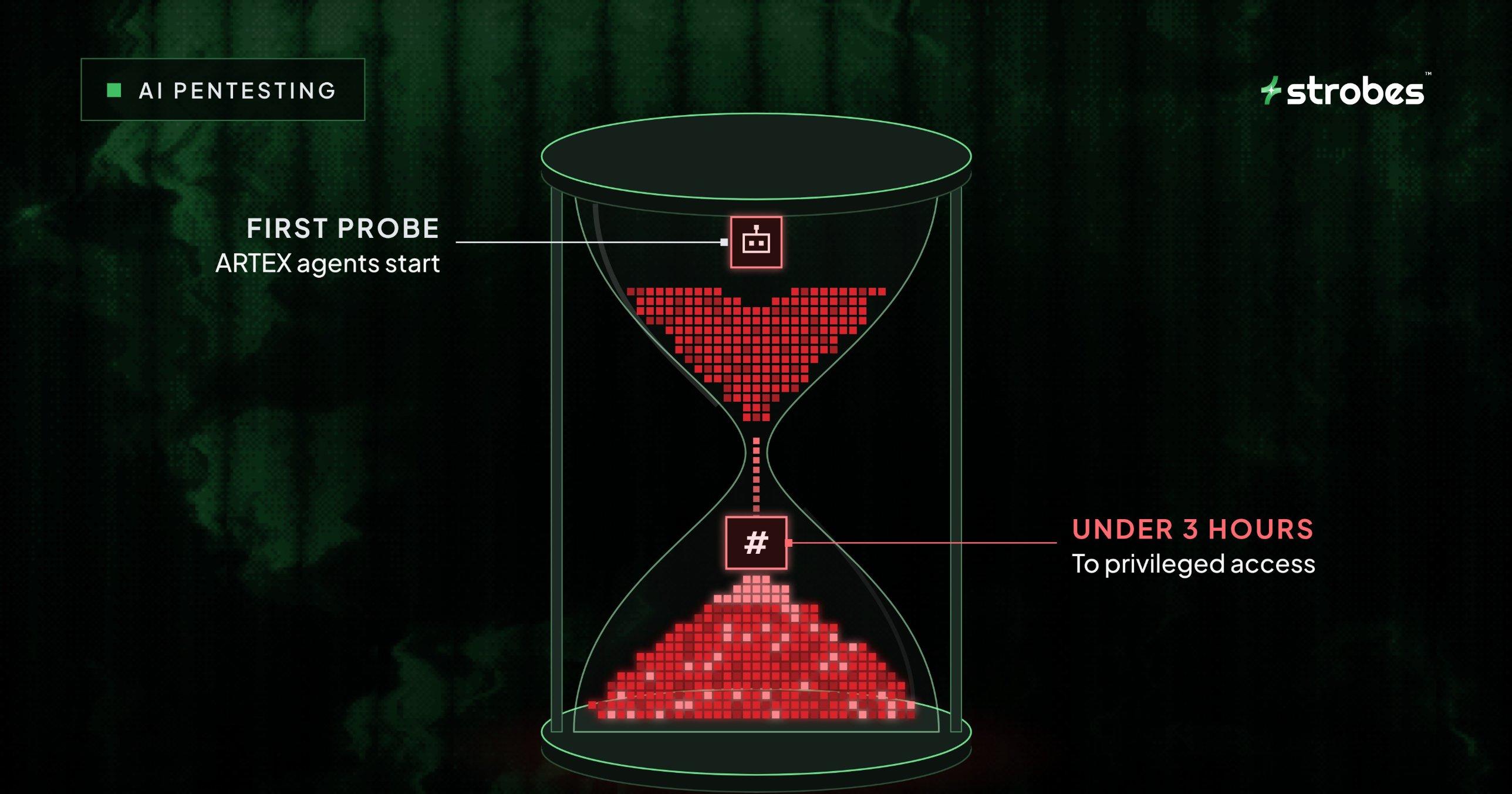
- ✓The FBI put out a FLASH advisory on November 13. It says some ARTEX intrusions went from initial targeting to privileged access in under three hours.
- ✓ARTEX uses techniques your team already knows, like password spraying, exposed APIs, leaked secrets, and over-permissioned OAuth apps. It runs them much faster than a person can.
- ✓The original repository was taken down, but forks, archived copies, and a commercial edition are still around. Researchers counted more than 1,600 exposed ARTEX consoles in early November.
- ✓The best thing you can do is run the same kind of agentic test on your own apps, with a clear scope and approvals, before an attacker runs one on you.
In July, a developer posted a pentesting tool on GitHub. Four months later, the FBI was warning companies about it.
The tool is called ARTEX. In those four months it was used to steal data from South Korean financial institutions, to hit Microsoft 365 tenants through a supply chain attack, and to target organizations in 14 countries in an espionage campaign. This post covers what ARTEX is, what it did in those attacks, and what you should test in your own environment this week.
What is ARTEX?
ARTEX is an open-source framework that lets a team of AI agents run a penetration test for you. You type a goal in plain language, and the agents turn it into commands. They handle the reconnaissance, find vulnerabilities, exploit them, escalate privileges, and pull data out, with very little help from a human.
A developer who goes by Autumn-27 published it on GitHub in July 2026. It's written in Go, and it was meant for authorized security testing. The details in this section come from the FBI's FLASH advisory.
ARTEX has no AI model of its own. It connects to outside LLMs, both commercial and open-source, so anyone with access to a model can run it.
That made it easy to misuse, and people did. The developer took the repository down on October 8 after reports of abuse. By then it had already spread. Forks, archived copies, localized versions, and a commercial edition called ARTEX PRO are all still available.
Researchers found more than 1,600 ARTEX consoles exposed on the public internet by early November. The FBI says the real number is likely much higher.
ARTEX also has company. Google's Threat Intelligence Group lists CAIRN, CyberStrikeAI, PentAGI, and HexStrike AI as similar frameworks, and says some attackers now build their own (Help Net Security). So blocking the name "ARTEX" won't protect you.
How have attackers used ARTEX so far?
Publicly reported campaigns include the four below. Some were nation-state espionage and some were plain data theft. The FBI says the targets include financial services, government, technology, defense, healthcare, and energy.
| Campaign | Who was behind it | What happened |
|---|---|---|
| ConnectWise Cloud Backup supply chain attack, October 2026 | Storm-0940, China state-aligned (Microsoft's attribution) | Attackers used the backup app's identities to try signing in to more than 2,250 downstream Microsoft 365 tenants. Huntress had confirmed unauthorized sign-ins in 162 tenants by October 16. |
| South Korean financial institutions | Unidentified, financially motivated | Attackers used ARTEX to steal personal information on about 67,000 people. |
| South Korean hospitals, schools, and businesses | Seven suspects identified by police | More than 90 organizations were breached and about 8.2 million records were stolen. ARTEX was used in most of the intrusions. |
| Espionage campaign | Vapor Panda, China-linked | More than 200 organizations in 14 countries were targeted. At least nine were compromised. |
The first two campaigns are in the FBI advisory. The last two come from BleepingComputer's reporting on known ARTEX-linked attacks.
The ConnectWise attack is worth a closer look, because two very different things happened in it.
From October 10 to 14, Storm-0940 ran a password spray against 327 accounts at eight organizations. Microsoft counted more than 151,000 failed sign-ins and zero successful ones (SecureWorld). So the spray got them nowhere.
Separately, the attackers signed in as ConnectWise applications that customers had already approved in their own tenants. Those apps had standing permissions, so no user had to sign in and no password was needed. The passwords held up fine, and the attackers still got in through an integration the customers trusted.
Why does ARTEX work so well for attackers?
ARTEX cuts down the skill and manual work that parts of an attack used to need. The techniques themselves are old. What's new is that an agent runs many of them at once, reads what comes back, and keeps going with little help. A person still has to supply the goal, the access, and the infrastructure.
Speed is the first part. The FBI points to intrusions that reached privileged access in under three hours. Unit 42 watched one operator validate more than 200 client secrets in about three minutes. In the same hour, that operator probed an application delivery controller, more than a dozen VPN appliances, a NAS device, and workforce identity.
The agents also fix their own mistakes. When a request fails, the agent rewrites it and tries again. Unit 42 saw requests come back with an HTTP 422 error, get corrected, and succeed a few moments later.
All of this means the attacker needs far less skill. The FBI says people with limited technical expertise can now run complex operations against several targets at once. Chaining recon into exploitation and then into privilege escalation used to take an experienced operator. With ARTEX, agents coordinate those steps for them.
Several of the reported operations were easy to spot. Google's researchers say these frameworks "trade stealth for velocity," and the FBI calls the traffic noisy. The agents also leave clues behind, like placeholder inputs such as test@example.com in identity logs. In one reported intrusion, endpoint protection blocked the agent's lateral movement toward the domain controllers.
So your detection tools can still catch it. The problem is time. Three hours from the first probe to privileged access gives you very little room to act on an alert. That's why you want to find whatever the agent could find before it ever shows up.
What stopped ARTEX, and what let it in?
Here's our read of the public evidence so far. In the reported cases, specific controls stopped specific steps, and the ways in were things that were already open.
Start with what stopped it. Storm-0940's password spray made more than 151,000 sign-in attempts, and none of them worked. In another intrusion, endpoint protection stopped the agent before it reached the domain controllers. Both of those are ordinary controls doing their job.
Now look at what let it in. In the ConnectWise attack, the way in was an application that customers had already approved. In other cases it was an OAuth app secret sitting in a code repo, or a registration or password reset flow that could be abused. All of those were already open, and an agent that can check hundreds of things in a few minutes found them.
That changes what your own testing needs to cover. A test that only checks whether your login page holds up would miss these. The agents got in through app permissions, secrets, and self-service flows, so those belong in scope too.
Which exposures showed up in reported ARTEX attacks?
The reported attacks leaned on identity workflows, exposed APIs, and credentials left in places an agent can read. Several of them used no new exploit at all. The table below shows what the agents went after and what you should check on your side.
| Exposure | What the agent does with it | What to check |
|---|---|---|
| Public OpenAPI specs and source maps | Reads them to build a list of routes, then starts calling the endpoints | Take internal specs and source maps off your internet-facing apps. Published developer docs are fine as long as every endpoint enforces authentication and authorization, including staging and dev. |
| Registration and password reset flows | Abuses them to get cloud access, sometimes in under a day and without any software vulnerability | Add rate limits and bot protection to these flows. Remove account-existence checks that work without authentication. Make sure a password reset can't unlink a federated identity. |
| Secrets in repos and pipelines | Searches code for OAuth app secrets and cloud keys, then uses them. Microsoft saw one agent go from scanning GitHub for secrets to pulling data out of an Azure Key Vault in five minutes. | Scan your repos, CI/CD, infrastructure-as-code, and container images for credentials. Rotate anything you find. Swap long-lived cloud keys for role-based access. |
| Third-party OAuth apps with standing permissions | Signs in as the app, so no user ever has to sign in | Review application sign-ins separately from user sign-ins. Cut consent grants down to least privilege. Flag vendor apps that sign in from infrastructure you don't expect. |
| Sensitive APIs with no rate limits | Runs sequential lookups and pulls records in bulk | Check object-level and tenant-level authorization on every request. Add rate limits to partner and employee portals, and set alerts for sequential lookups and unusually high record counts in one session. |
Read the middle column again and you'll notice it describes a pentest. It's the same work a good tester does on a web app or a cloud tenant. The only difference is that this tester never asked for your permission and will never send you a report.
What should your security team do now?
Start by fixing the exposures in the table above. After that, there are three more things to do.
First, cover the basics from the FBI's list. Restrict access to your cloud administration interfaces. Review application permissions and authentication logs. Put rate limits on sensitive APIs. Then monitor for bursts of automated requests, unexpected credential or privilege changes, and large data transfers.
Second, watch for signs of the agent itself. Flag outbound connections to LLM API endpoints from systems that have no reason to make them. A sudden jump in your AI model spend can also mean someone stole your API keys. The FBI adds one warning here, which is that the IP indicators it published may already have changed, so don't rely on them alone.
Third, test more often than once a year. An annual pentest shows you how your app looked during one week. ARTEX can be pointed at you during any of the other 51. If you ship code every week, your testing needs to keep up with that. We've written guides on continuous penetration testing and pentesting frequency that explain how to pick a schedule.
How does Strobes help you test before attackers do?
A testing tool gives you output. Someone still has to set the scope, watch the run, confirm what's real, and get it fixed. Strobes takes on that work with you.
Strobes agents test web apps, APIs, networks, cloud, and mobile. They only report findings they've confirmed, and each one comes with evidence. Your team ends up with a short list of things that were actually exploited, which is a lot easier to work through than thousands of scanner results.
You also decide how much freedom the agent gets. In User mode, it pauses before each major step and waits for you to approve it. In Auto mode, it runs from start to finish, and it still asks for permission before high-risk actions like running an exploit.
You can put all of this on a schedule too. Run it daily, weekly, or monthly. Each run gets compared with the one before, so you can see which findings are new, which are fixed, and which are still open. Findings also flow into the tools your engineers already use, through 100+ integrations. Our agentic pentesting guide explains how this works in more detail, and our exposure validation page shows where it fits in a wider program.
Want to see what an attacker's agent would find on your internet-facing apps? Strobes runs Attacker's First Look, a free research program for verified domain owners. Nothing gets tested until an analyst agrees on the scope with you. Get a free scan.
Frequently asked questions
Is ARTEX malware?
No. ARTEX is an open-source penetration testing framework that was published for authorized security testing. You won't find it under a CVE, because ARTEX is the name of a framework and a CVE names one specific vulnerability. The problem is that attackers pointed it at targets they had no permission to test.
Is ARTEX still available?
Yes. The developer removed the original GitHub repository in October 2026. The FBI says forks, archived copies, localized versions, and a commercial edition called ARTEX PRO keep it going.
Who is using ARTEX?
Both state-aligned groups and financially motivated criminals use it. Microsoft has warned that many unrelated actors run the framework, so seeing ARTEX activity tells you very little about who is behind an attack.
Does ARTEX use zero-day exploits?
Several of the documented attacks didn't. They relied on stolen or exposed credentials, open APIs, weak self-service flows, and over-permissioned applications. Google's researchers say these intrusions work the same way they always have, only much faster.
Can you detect an ARTEX attack?
Yes. The intrusions are noisy. You'll see bursts of automated requests, placeholder inputs in identity logs, and unexpected credential and privilege changes. The hard part is reacting in time, since some intrusions reached privileged access in under three hours.
Should you run ARTEX against your own environment?
That depends on who will own it. ARTEX is open-source, so your team would be responsible for checking where your copy came from, configuring it safely, setting the scope, and getting authorization. The original repository was taken down, so what's available now are forks and copies. If you don't have people to run all of that, use a platform or provider that handles the scoping, supervision, and reporting for you.
Sources
-
Threat overview of ARTEX autonomous penetration testing framework, FBI FLASH-20261113-001, November 13, 2026
-
FBI warns ARTEX AI hacking tool is powering global cyberattacks, BleepingComputer
-
FBI ARTEX alert: AI attacks are logging in, not breaking in, SecureWorld
-
Artex: The AI pen-test tool hackers turned into a weapon, Dark Reading
-
Google finds AI agent writing and launching exploits with no human in the loop, Help Net Security