Deep dives, expert analysis, and practical guidance on exposure management, adversarial validation, and the future of AI-driven exposure management.
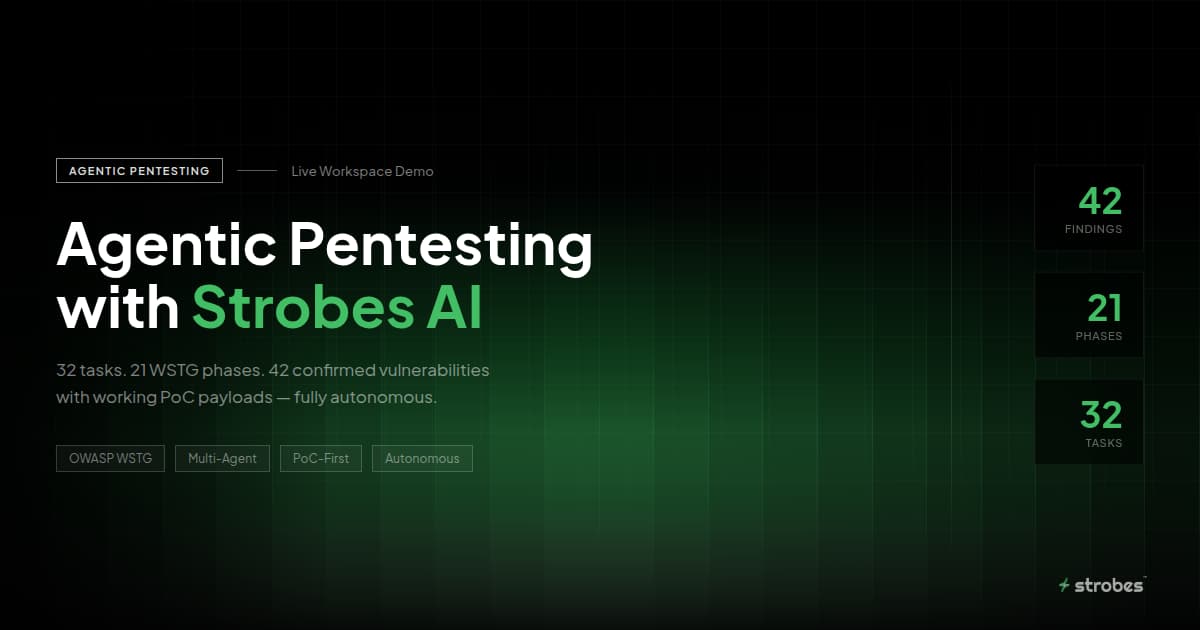
What happens when you point Strobes AI at a real web app and let it run a full OWASP WSTG assessment with zero hand-holding? 32 tasks, 21 phases, 42 confirmed vulnerabilities — all autonomous.
The model is 20% of the problem. Here is the engineering story behind the orchestration, tooling, middleware, and infrastructure that turns a capable LLM into a reliable penetration testing operator.
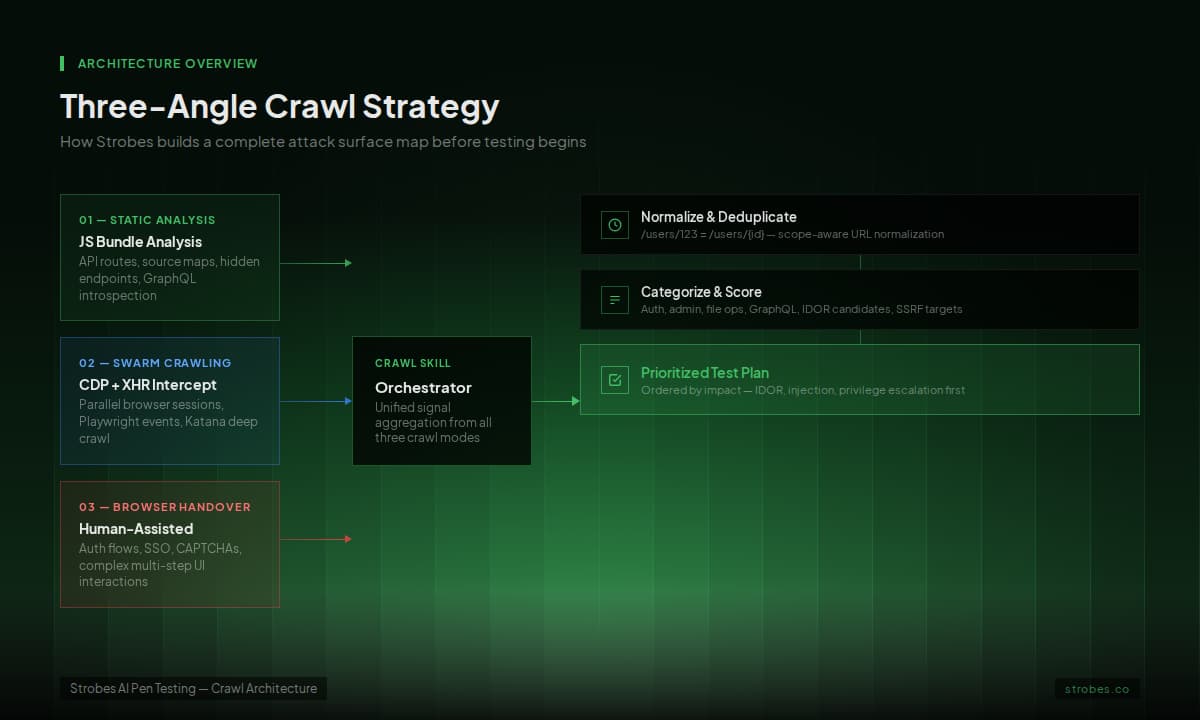
AI agents are brilliant at reading code but terrible at navigating browsers. Here's how Strobes combines static analysis, CDP-based swarm crawling, and human browser handover to build a complete attack surface map before testing begins.

An assumed breach assessment starts with the attacker already inside, so the whole budget goes to detection, response, and blast radius instead of the front door. Here is how it works and when to use it.
Red team methodology runs in five stages, recon, initial access, foothold and C2, lateral movement and privilege escalation, then actions on objective. Here is each stage with the ATT&CK techniques and the detections that should fire.
Red team vs blue team is the wrong question for a CISO. The right one is how fast the gap between what red gets away with and what blue catches is closing. Here is how to run both.
A red team assessment is a goal-based attack simulation that tests whether your SOC would catch a real adversary. Here is what one looks like end to end, with the detection gaps it exposes.

A social engineering penetration testing field guide: building an OSINT pretext, running an authorized GoPhish campaign, mapping to MITRE ATT&CK T1566, and the metrics that prove resilience.
An IoT penetration testing field guide: binwalk firmware extraction, cracking /etc/shadow with hashcat, dropping to a U-Boot root shell, flashrom SPI dumps, and open MQTT brokers.
A field guide to thick client penetration testing: decompiling .NET with dnSpy, Frida auth hooks, named-pipe DACL abuse, and the report-grade findings that come out of it.

Most domains fall without a single CVE. This Active Directory penetration testing checklist walks the phases with real Kerberoast and Certipy output, a findings table, and the controls that actually break each path.

DAST scans running apps automatically, pentesting adds human exploitation, and agentic pentesting is the AI-driven third category. Here is how all three compare on depth and frequency.
