

Cyber security insurance used to be an optional safety net. Now? It’s a must-have. With ransomware, data breaches, and cyberattacks rising, companies need protection against financial losses.
But here’s the challenge—getting affordable cyber insurance is harder than ever. Businesses with weak security often face sky-high premiums or, worse, get denied coverage altogether. That’s where Continuous Threat Exposure Management for Cyber Security Insurance comes in, helping businesses strengthen security and improve insurability.
That’s where Continuous Threat Exposure Management (CTEM) comes in. It’s not just about security, it’s about proving to insurers that your business is a lower-risk bet. By continuously identifying and fixing vulnerabilities, CTEM helps organisations strengthen their security and improve their insurability. The result? Potentially lower premiums and better coverage. Let’s break it down.
- Why Cyber Insurance Is Getting Tougher to Get?
- How CTEM Helps You Get Better Cyber Insurance
- Why CTEM is Critical for Cyber Insurance?
- What’s the Catch? Challenges & How to Overcome Them
- Final Thoughts
Why Cyber Security Insurance Is Getting Tougher to Get?
Cyber insurance covers things like:
- Data breaches
- Ransomware attacks
- Business disruptions caused by cyber incidents
- Regulatory fines
But insurers aren’t handing out policies like they used to. With more claims coming in, they’re getting stricter about who qualifies. To get covered (or to avoid outrageous premiums), businesses need to prove they take security seriously.
Here’s what insurers look at when assessing risk:
- Your overall security posture
- Past security incidents and claims
- Compliance with security standards (NIST, ISO 27001, PCI DSS)
- Whether you use proactive security solutions like CTEM
The good news? A strong CTEM strategy helps you check all these boxes.
How Continuous Threat Exposure Management for Cyber Security Insurance Helps You Get Better Coverage?
1. Cyber Insurers Reward Proactive Risk Management
Insurance providers don’t just want to see security policies on paper. They want proof that you’re actively reducing risk. A CTEM platform does exactly that. Here’s how:
- Real-time risk assessment: Unlike traditional audits, CTEM works 24/7 to detect threats.
- Focus on critical vulnerabilities: Not all security gaps are equal. CTEM priorities the ones that matter most.
- Fewer successful attacks: By fixing high-risk issues before attackers exploit them, CTEM lowers your chances of needing to file a claim.
- Stronger compliance: Many cyber insurers require adherence to industry frameworks. CTEM helps businesses stay compliant without the last-minute scramble.
Bottom line? Companies with continuous security monitoring often qualify for lower premiums.
2. What the Data Says: Insurers Prefer Proactive Security
The relationship between cybersecurity posture and Cyber Security Insurance premiums is becoming increasingly evident. Insurance providers now require organizations to demonstrate strong security measures to qualify for affordable coverage.
Reports from leading insurers show a clear trend: businesses with proactive risk management strategies, including Continuous Threat Exposure Management for Cyber Insurance, experience fewer claims, lower financial losses, and more favourable policy terms.
Coalition Cyber Insurance Report: Active Risk Management Reduces Claims
Coalition’s 2024 Cyber Claims Report highlights the significant impact of proactive security measures on Cyber Security Insurance claims. The report underscores that organisations that embraced active cybersecurity management experienced a notable reduction in incident severity and claim frequency. Key findings include:
- Cyber claims increased year-over-year (YoY), with an overall 13% rise in claim frequency. However, organisations that implemented real-time risk monitoring and remediation strategies saw fewer severe incidents.
- Ransomware claims dropped by 54% in the second half of 2023, despite global ransomware payments exceeding $1 billion. Businesses leveraging proactive cybersecurity solutions, like CTEM, were better equipped to prevent costly attacks.
- Email-based attacks remain the biggest threat, with Business Email Compromise (BEC) and Funds Transfer Fraud (FTF) accounting for over half of all claims. However, organisations with continuous monitoring were able to mitigate these threats more effectively.
- Boundary device vulnerabilities contributed to higher risk, companies using unpatched firewalls and VPNs experienced higher cyber claim rates. This reinforces the need for continuous exposure management to detect and remediate security gaps before insurers flag them as risks.
Marsh Cyber Insurance Report: Continuous Monitoring Lowers Premium Increases
Marsh’s Cyber Insurance Market Update reveals that organisations implementing proactive cybersecurity measures, including continuous threat monitoring and vulnerability management, received more stable premium rates compared to those relying on outdated security assessments. The report outlines:
- Companies with a continuous monitoring approach saw lower premium hikes, while those with periodic assessments experienced a steeper increase in insurance costs.
- Underwriters favour real-time risk data over static security audits—firms that regularly updated their security controls and could demonstrate ongoing risk reduction were granted more favourable terms.
- Ransomware incidents led to higher premiums, but organisations that had well-documented risk reduction strategies saw lower renewal increases. Insurers responded positively to demonstrated risk mitigation efforts like regular penetration testing, continuous vulnerability assessments, and CTEM-driven exposure management. Modern programs are extending this evidence with AI-driven penetration testing, giving underwriters continuous proof of exploitable-risk reduction rather than a once-a-year snapshot.
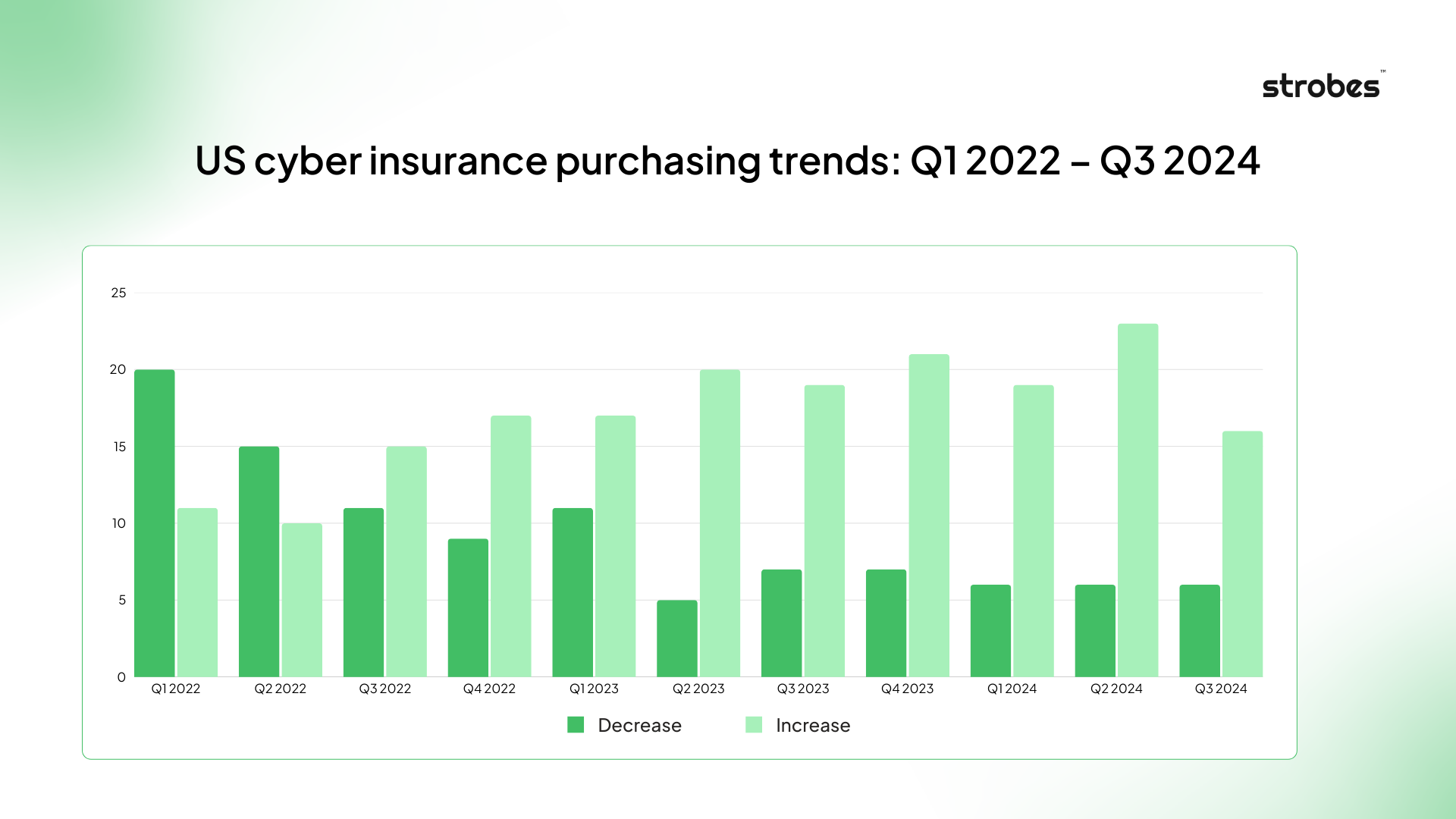
Hiscox Cyber Readiness Report: Security Investments Drive Insurability
Hiscox’s 2024 Cyber Readiness Report further reinforces that investment in cybersecurity directly influences cyber insurance costs and coverage availability. The report presents compelling insights:
- 67% of firms reported an increase in cyberattacks over the past 12 months, yet those with proactive risk management strategies faced fewer financial and reputational damages.
- Reputational damage is a growing concern, with 47% of affected organisations struggling to attract new customers after an attack. Cyber insurers increasingly assess the potential brand impact of breaches when underwriting policies, making CTEM an essential tool in preventing these incidents.
- Companies that actively invest in cybersecurity training and real-time risk assessments qualify for better insurance terms. Nearly 65% of businesses have implemented additional security training for remote employees, reducing their attack surface and improving insurability.
Why CTEM is Critical for Cyber Security Insurance?
The findings from Coalition, Marsh, and Hiscox clearly indicate that cyber insurers favour businesses that take a proactive approach to security. Continuous Threat Exposure Management (CTEM) aligns perfectly with these expectations by:
- Reducing the likelihood of cyber claims through real-time monitoring and vulnerability remediation.
- Lowering insurance premiums by demonstrating an active risk management posture.
- Improving underwriting scores, ensuring better coverage and policy flexibility.
- Enhancing incident response capabilities, which insurers value when assessing overall risk exposure.
As cyber threats continue to evolve, businesses that fail to implement continuous exposure management risk facing higher premiums, policy restrictions, or outright denial of coverage. Investing in CTEM is no longer just about strengthening security, it’s a strategic move to maintain affordable and comprehensive Cyber Security Insurance.
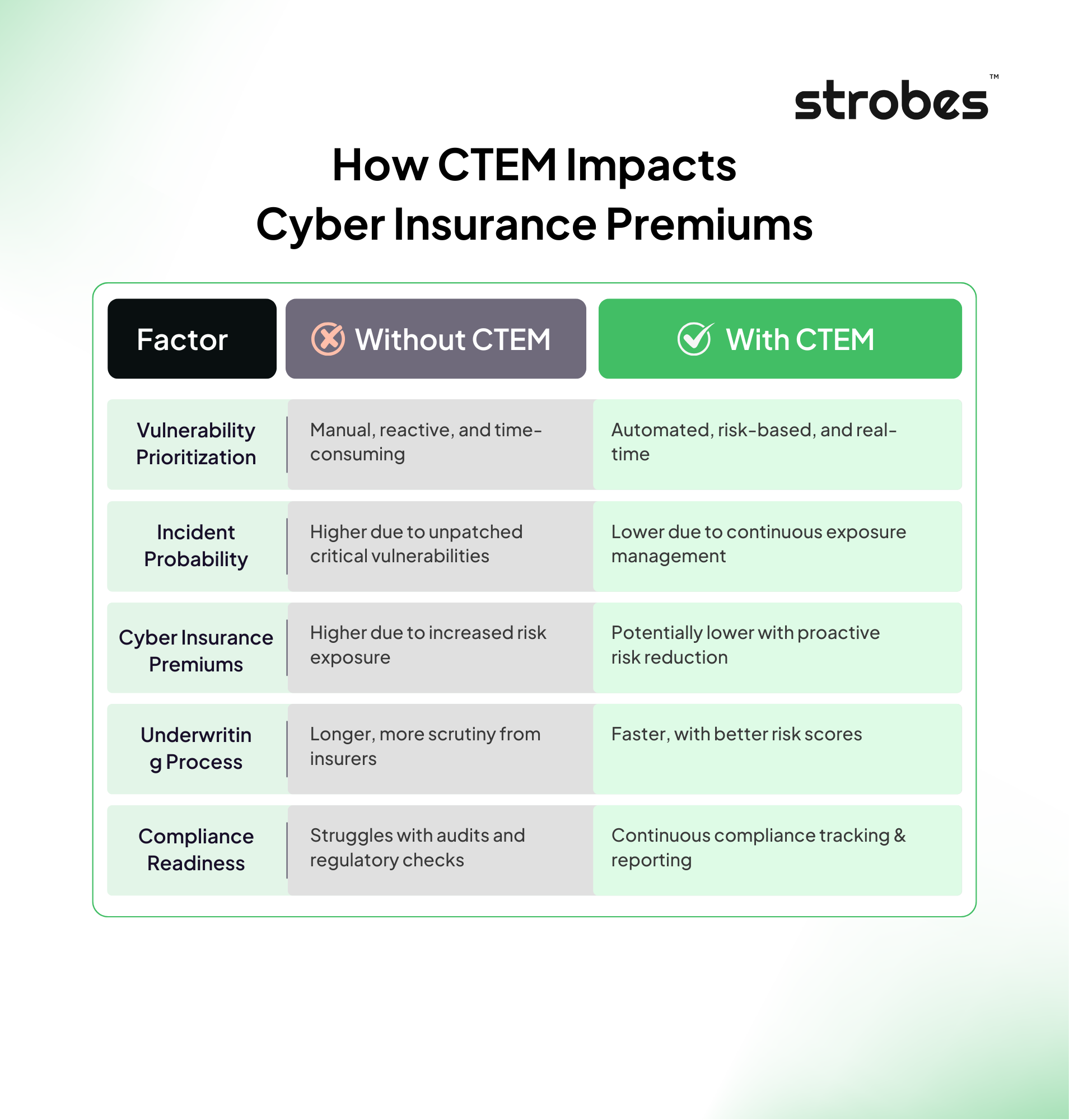
3. Key Ways CTEM Can Lower Your Cyber Security Insurance Costs
Implementing CTEM doesn’t just improve security, it can directly impact your insurance premiums. Here’s how:
Fewer Claims = Lower Premiums
Insurance costs are all about risk. If your business actively reduces threats, insurers see you as a safer bet. With continuous monitoring, you:
- Close security gaps before they turn into incidents.
- Minimise financial losses from cyberattacks.
- Build a clean claims history, which leads to long-term cost savings.
Higher Underwriting Scores
Insurers assess policyholders using frameworks like NIST CSF, CIS Controls, and ISO 27001. A CTEM program improves your underwriting score by showing:
- Consistent vulnerability management
- Ongoing risk assessment
- Compliance with security best practices
A higher score = better coverage options and lower costs.
Better Incident Response = Less Risk for Insurers
Insurance companies love businesses that respond fast to cyber incidents. Why? Because the faster you contain a threat, the less damage it causes.
CTEM helps by:
- Using AI-powered triage to quickly contain attacks.
- Providing insurers with detailed forensic data for claims.
- Reducing financial fallout—making you less risky to insure.
Easier Compliance with Security Standards
Most cyber insurers require businesses to follow specific security frameworks like:
- ISO 27001 (Information Security Management)
- SOC 2 (Service Organisation Controls)
- NIST Cybersecurity Framework
- PCI DSS (Payment Card Industry Data Security Standard)
CTEM automates compliance, helping organisations meet these requirements without the last-minute stress.
What’s the Catch? Challenges & How to Overcome Them
Even though CTEM offers clear advantages, some companies still struggle to see direct insurance discounts. Here’s why and how to fix it:
Not All Insurers Offer Explicit CTEM Discounts
While some insurers don’t advertise CTEM-based discounts, they do consider security maturity when setting rates.
- Solution: Provide insurers with reports on your continuous monitoring, risk reduction, and past incident prevention. These insights can help you negotiate lower premiums.
Proving CTEM’s Effectiveness to Insurers
Some companies fail to demonstrate how their CTEM strategy reduces risk.
- Solution: Keep detailed records, audit logs, vulnerability reports, and remediation timelines. Show insurers tangible proof of your improved security posture.
Measuring CTEM’s ROI in Insurance Reduction
It can take time to see direct insurance savings from CTEM.
- Solution: Track key metrics like incident reduction, claim likelihood, and renewal rates before and after implementing CTEM. This helps build a case for lower premiums.
Final Thoughts
Cyber Security Insurance providers are raising the bar, and businesses that can’t prove their security strength are paying the price, literally. That’s why implementing Continuous Threat Exposure Management (CTEM) isn’t just smart for security; it’s a strategic financial move.
With CTEM, you can:
✔ Proactively reduce cyber risks—which means fewer claims.
✔ Improve your underwriting score—leading to better coverage.
✔ Respond to incidents faster—making you a lower-risk client.
✔ Meet compliance requirements—so insurers see you as a safe bet.
Cyber threats are only getting more aggressive. And Cyber Security Insurance? It’s not getting any cheaper. If you want to stay protected without overpaying, now’s the time to start using CTEM.
If you want to stay protected without overpaying, now’s the time to start using CTEM. Book a free demo today to see how it works in action.
Related Reads:
- Demystify the Cyber Security Risk Management
- The Evolving Landscape of Security: From Vulnerability Management to CTEM
- CTEM for SaaS Security Leaders: A Practical Guide
- How CTEM Enhances Threat Prioritization in Complex Networks
- Key CTEM Metrics: Measuring the Effectiveness of Your Continuous Threat Exposure Management Program
- Platform: One Platform For All The Offensive Security Needs